01 // GAMES
Systems you can push back against
Compare immersive sims, role-playing games, action titles and narrative adventures by agency, world structure and the way technology enters play.
Load the games guide →Cyberpunk is more than rain, chrome and a suspicious number of rooftop billboards. Trace the genre through games, films, books and anime, then pull apart the visual language and power structures holding it together.
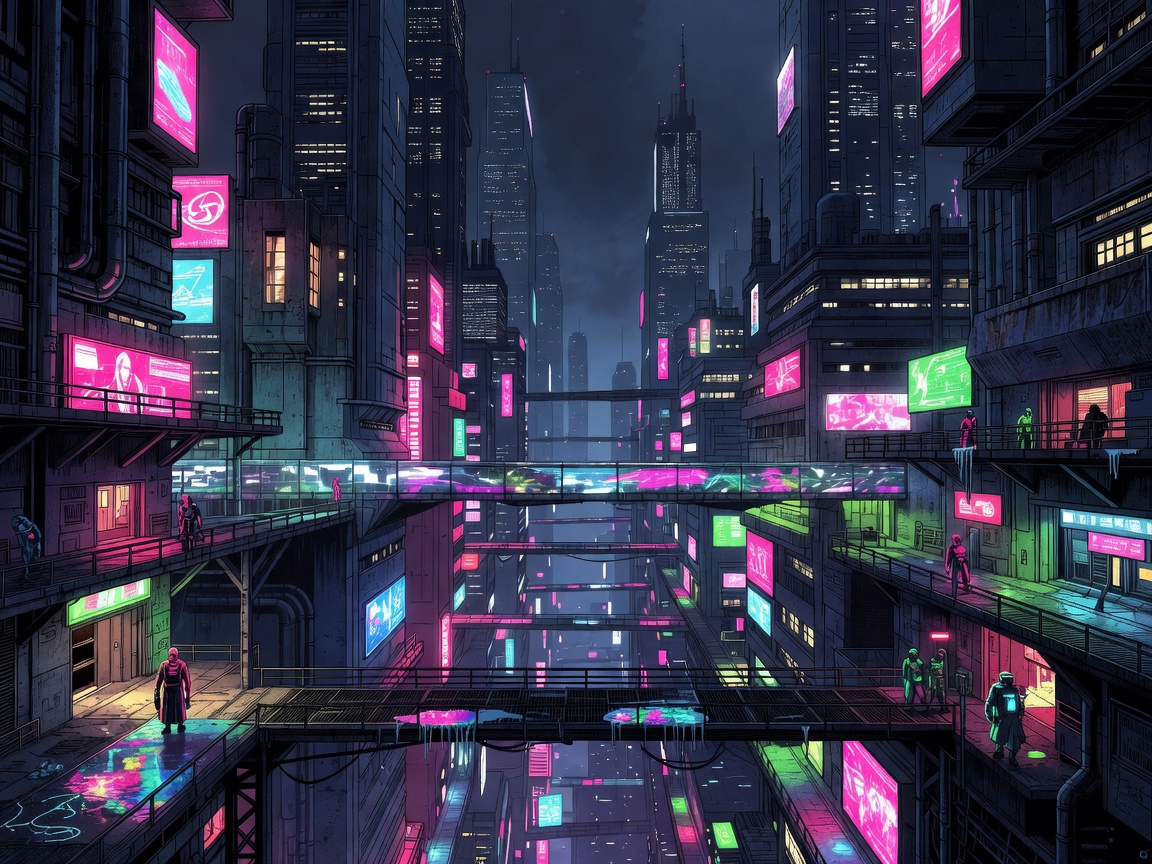
The medium changes the pressure. Games make systems playable. Film turns architecture into menace. Fiction gets under the skin of identity. Anime stretches bodies and cities past polite limits. Style carries the code into clothing, music and design.
Compare immersive sims, role-playing games, action titles and narrative adventures by agency, world structure and the way technology enters play.
Load the games guide →Move from noir investigation to body horror and corporate satire. Learn what framing, production design and sound contribute beyond the plot.
Run the film reel →Follow the lineage from foundational novels to post-cyberpunk revisions, with selection cues for prose density, viewpoint and conceptual load.
Open the book stack →Distinguish feature films, serial experiments and kinetic action by their treatment of embodiment, memory, policing and machine intelligence.
Tune the anime channel →Break down neon, brutal infrastructure, tactical fashion, electronic sound and interface clutter while keeping the politics in frame.
Decode style and themes →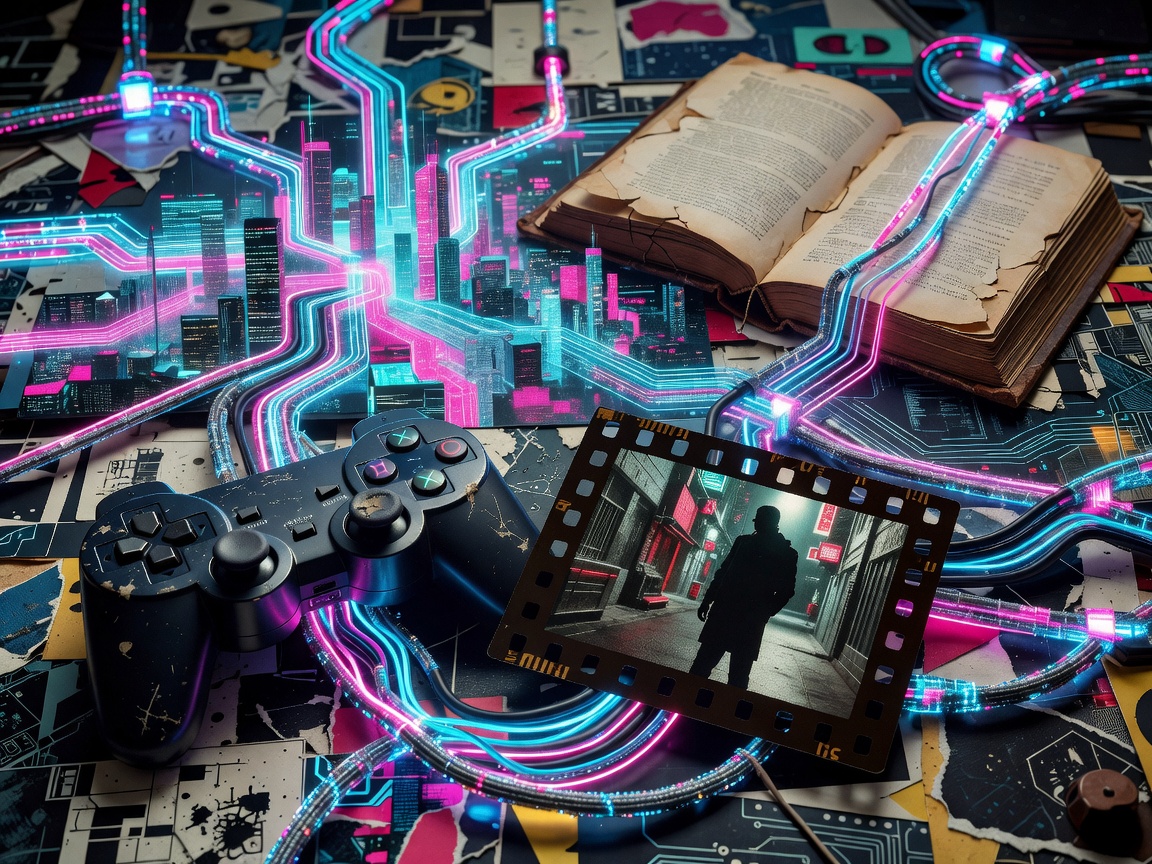
The strongest route through cyberpunk is lateral. Compare how one idea mutates when the medium changes. A novel can render cyberspace through voice and metaphor. A film must make it visible and audible. A game can turn access, surveillance or augmentation into a rule you negotiate.
Keep three questions active: who owns the infrastructure, who gets altered by it, and who can refuse? They expose the difference between cyberpunk’s surface vocabulary and its actual dramatic machinery.
Start with the written code