Noir supplies the nervous system
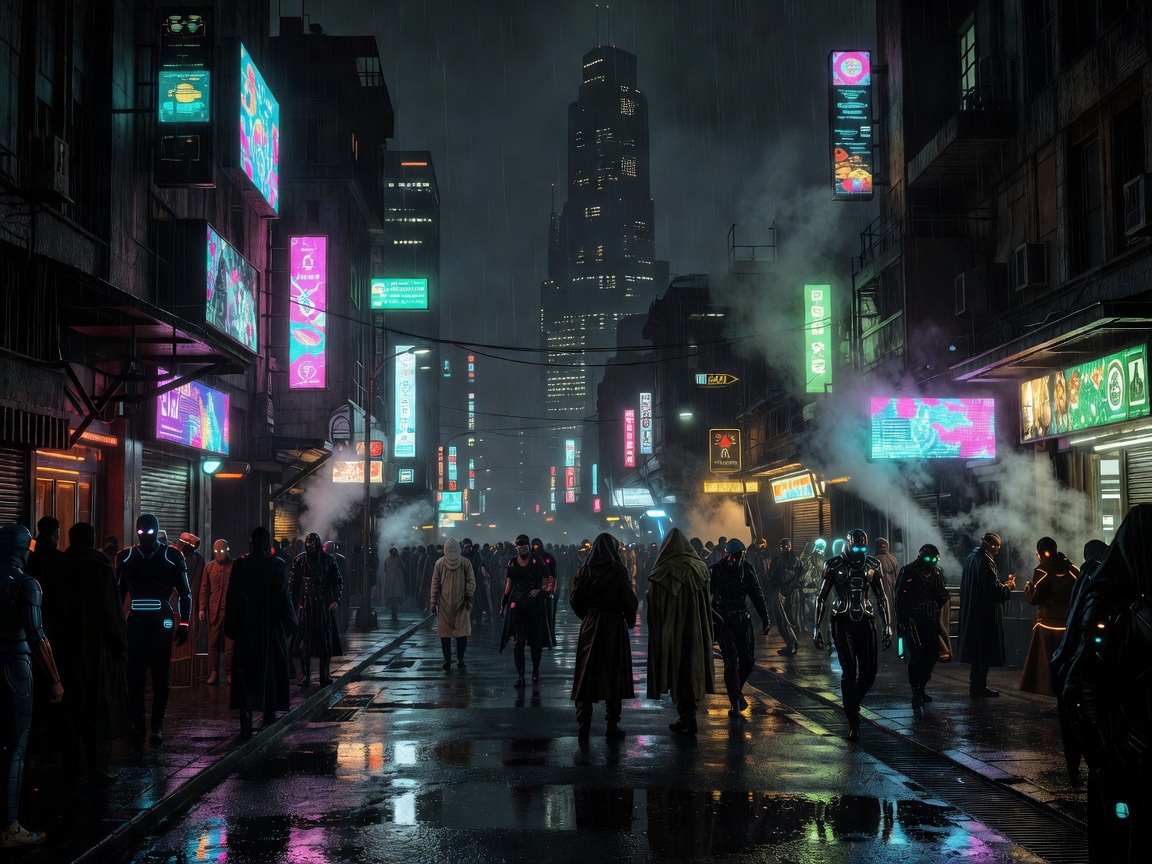
Cyberpunk film inherits noir’s compromised investigators, unstable identities and cities organised around hidden power. The detective structure is useful because it moves a character across social layers: street markets, police offices, corporate interiors and private rooms. Each clue reveals not only what happened but who has the authority to define reality.
Blade Runner fuses that structure with questions about artificial life and manufactured memory. Its influence is often reduced to rain and neon, but the more durable feature is contrast. Monumental corporate buildings sit above crowded multilingual streets. Advanced biotechnology coexists with decaying infrastructure. The visual world argues that technological sophistication and social progress are separate variables.
Production design is political geography
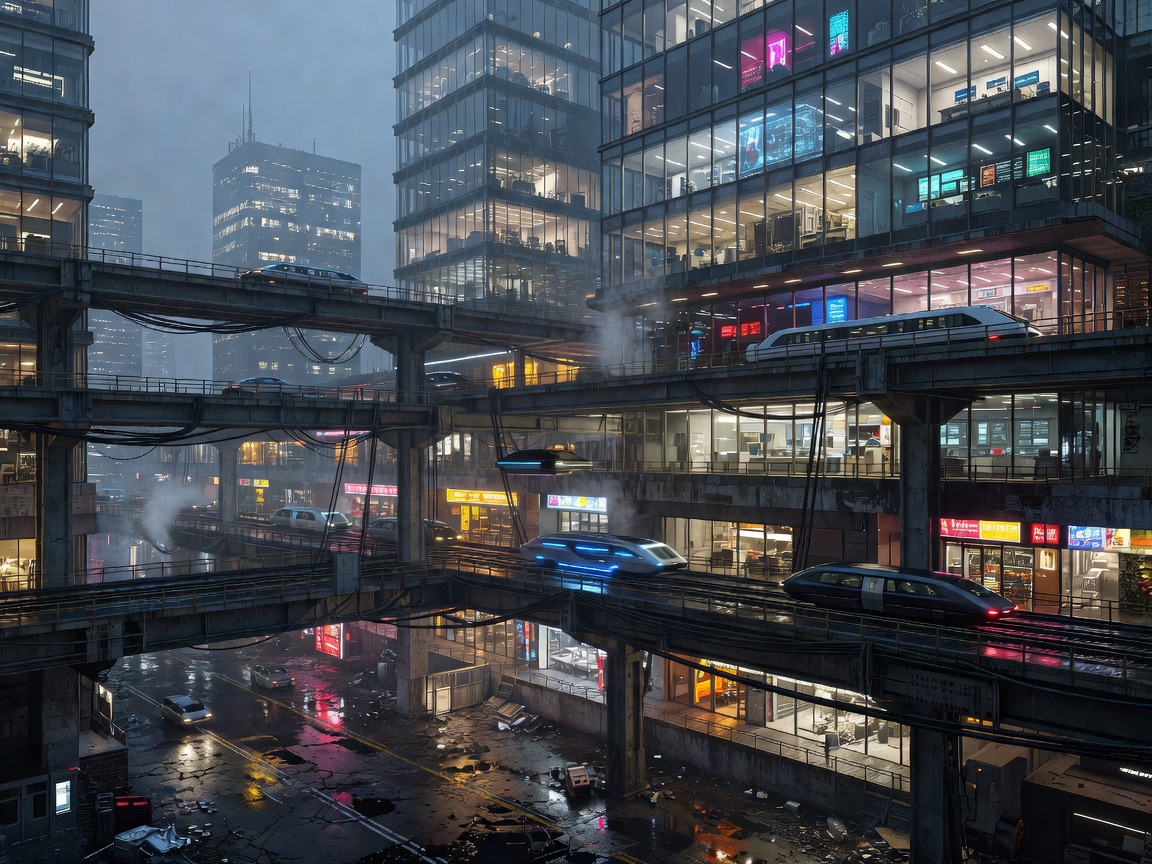
Read a cyberpunk city vertically. Height usually marks control: executive rooms, elevated transport and distant towers. Street level holds repair, trade, food, policing and informal survival. Screens fill the gap, broadcasting the voice of institutions into shared space. This geography can be more informative than exposition because it shows who receives privacy, daylight and distance.
Blade Runner 2049 extends this language through enormous negative space, industrial ruins and controlled interiors. Its scale can feel austere rather than crowded, yet the same hierarchy persists. Environments sort bodies by function. Synthetic labour, policing and memory production are presented as linked industries rather than isolated inventions.
Body horror takes technology personally
Some films move the conflict from the skyline into flesh. Videodrome treats media technology as an invasive force that destabilises perception and the body. Tetsuo: The Iron Man drives metal and machinery into a frantic transformation narrative. These works are abrasive by design. They refuse the clean showroom version of technological change.
RoboCop combines body horror with corporate satire. Privatised policing, media fragments and product language surround a protagonist whose body has become company property. The film’s humour sharpens rather than softens the critique. It shows how institutional violence can be packaged as efficiency, then sold back to the public with a straight face.
Networks, simulation and controlled reality
The Matrix shifts the cyberpunk city into a simulated environment. Its action grammar is immediately legible, but the deeper mechanism is epistemic control: perception itself belongs to the system. The film pairs that abstraction with tactile interfaces, damaged machinery and vulnerable human bodies. Clean virtual surfaces depend on grim physical infrastructure.
Strange Days uses recorded experience as a black-market commodity, connecting surveillance, voyeurism and memory. Minority Report centres predictive policing and personalised advertising. Its sleek interfaces are seductive, which is precisely the trap. Cyberpunk cinema often makes control attractive enough to explain why institutions and consumers would adopt it.
Different tones, different pressure
| Mode | Primary pressure | Visual tendency |
|---|---|---|
| Noir investigation | Identity, evidence and hidden power | Shadow, reflections and layered streets |
| Corporate satire | Privatisation and commodified violence | Advertisements, broadcasts and hard surfaces |
| Body horror | Loss of bodily boundaries | Metal, tissue and unstable texture |
| Simulation thriller | Control of perception | Contrasting real and constructed spaces |
Selection works better by tone than by fame. If you want philosophical noir, choose films where investigation and identity remain entangled. For institutional critique, look for media satire, policing and corporate procedure. For visceral transformation, body horror pushes past tasteful futurism. For action, ask whether choreography expresses the technology or merely occurs beside it.
How to watch beyond the surface
Track interfaces. Who can use them without friction? Who is scanned, blocked or categorised? Notice whether machines disappear into elite environments while remaining exposed and hazardous in poor ones. Listen for the split between public sound and private silence. Advertising, announcements and mechanical noise can make a city feel occupied even when no authority figure is on screen.
Then inspect the ending. Cyberpunk rarely offers clean systemic victory. A protagonist may recover a memory, escape a pursuit or expose a crime while the larger apparatus survives. That does not make the story futile. It keeps the scale honest. These films are built around people trying to remain legible to themselves inside systems that prefer them as products, records or replaceable parts.