Urban rupture and uncontrolled power
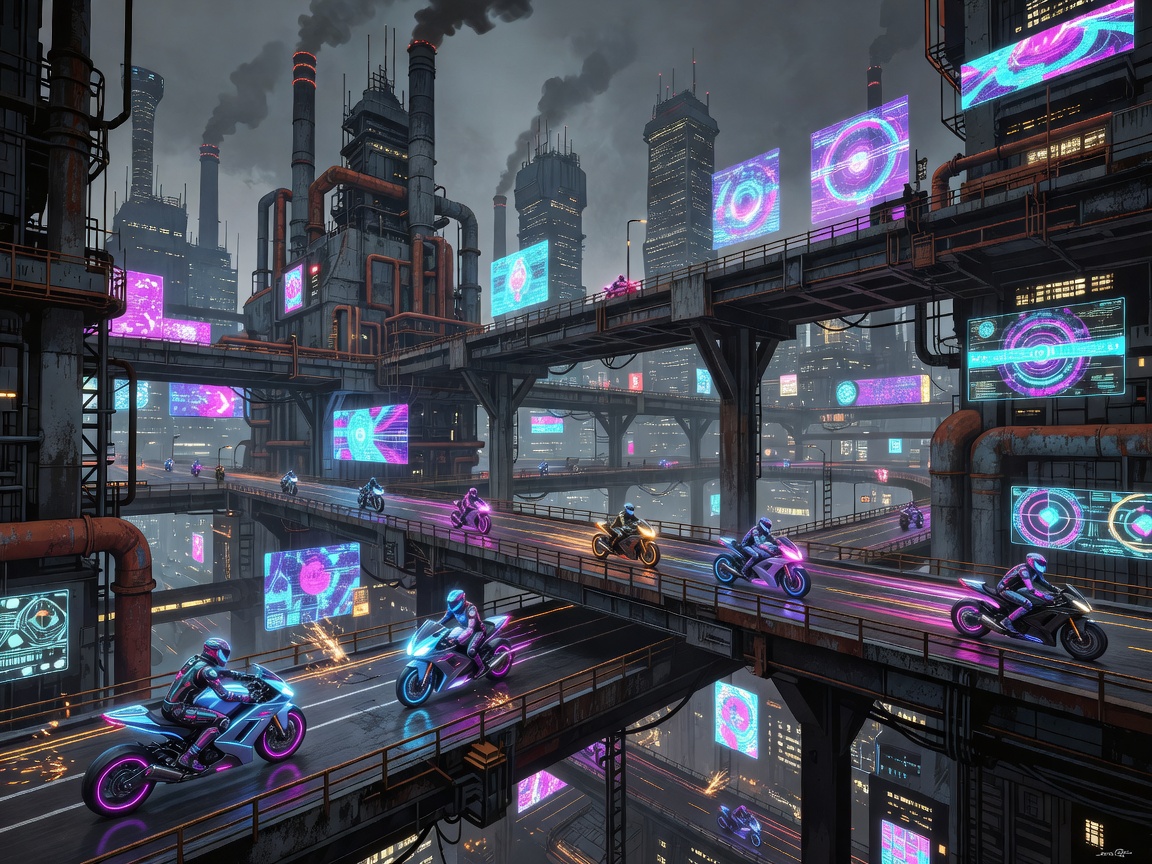
Akira is often approached through its motorcycle, red jacket and explosive city, but its cyberpunk force lies in institutional pressure. Military research, political disorder, youth alienation and urban reconstruction converge around power that cannot be contained. Neo-Tokyo is not a neutral background. Roads, towers, protest crowds and buried facilities form a city trying to suppress its own history.
The animation gives machinery weight. Vehicles lean, scrape and break. Infrastructure feels engineered rather than summoned. That physical conviction makes psychic transformation more disturbing: the world has established rules of mass and texture before the body begins to exceed them. Watch it for urban movement and body horror as much as narrative explanation.
The ghost inside the network
Ghost in the Shell asks what remains of identity when memory, perception and the body can all be technologically mediated. Its protagonist’s artificial body is not a simple enhancement fantasy. It places personal continuity, state employment and network access under the same question. The film’s quiet city passages matter because they create room to consider whether a self is located in flesh, information or social relation.
Ghost in the Shell: Stand Alone Complex expands those concerns through procedural storytelling. Investigations bring cybercrime, policing, refugees, corporations and public information into sustained contact. The serial format allows institutional consequences to accumulate. It is a better choice than the film for viewers who want political machinery and team dynamics alongside philosophical inquiry.
Serial experiments and unstable reality
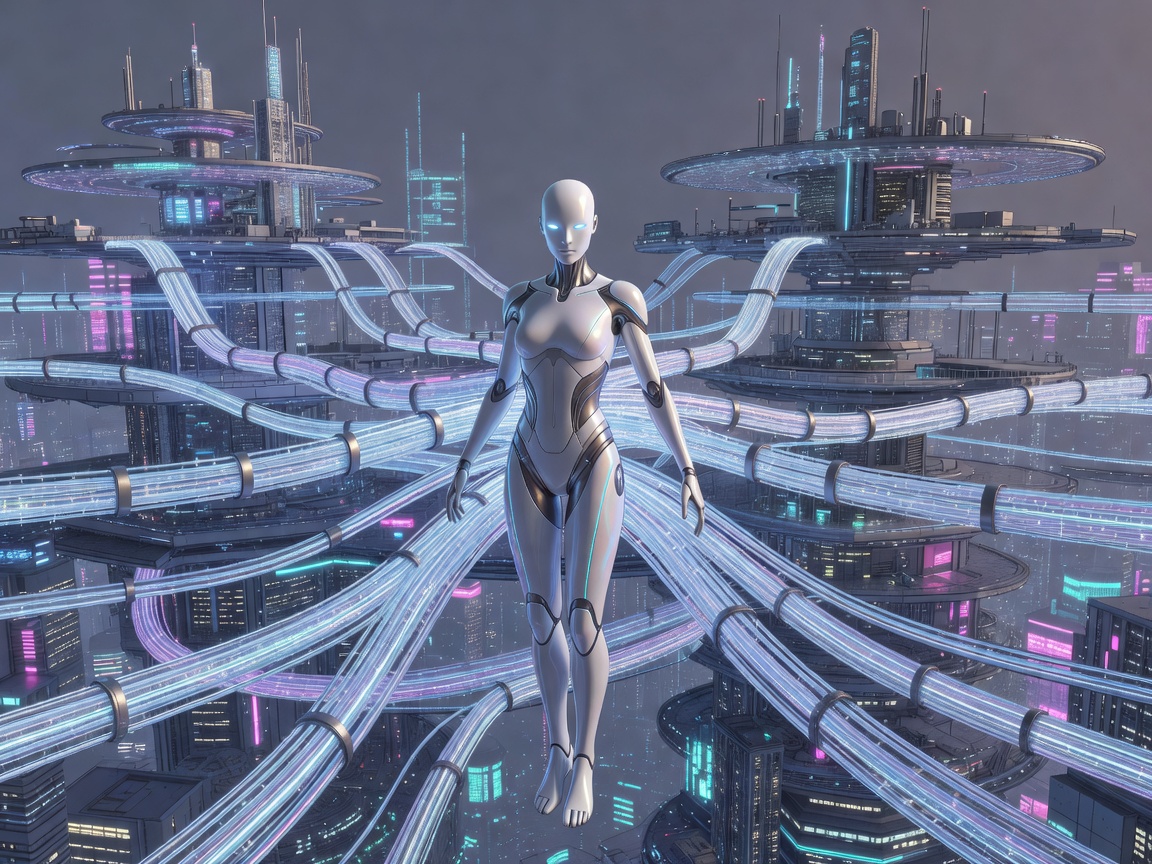
Serial Experiments Lain strips away much of the genre’s conventional action. Domestic rooms, power lines, school corridors and the Wired become zones of uncertainty. Repetition and silence do the work usually assigned to spectacle. The series is less concerned with a hero using the network than with the network changing the conditions under which a coherent person can exist.
Choose it when you want ambiguity and atmosphere rather than clean exposition. Its fragmented structure asks the viewer to assemble relationships between identity, communication and collective attention. The experience is closer to tracing interference than following a conventional thriller. That opacity is purposeful, though it will not suit every entry route.
Labour, policing and the machine body
Patlabor 2: The Movie approaches technological society through institutions, defence and political stability. Its machines are embedded in work and state power rather than treated as exotic intrusions. The restrained tone shows another cyberpunk register: procedural, architectural and suspicious of apparently peaceful systems.
Cyber City Oedo 808 offers a harder, pulp-driven route through criminal operatives, coercive authority and high-tech threats. Battle Angel Alita places bodily replacement, class stratification and violence within a divided urban environment. Ergo Proxy shifts towards philosophical dystopia, enclosed habitats and artificial beings. These works share ingredients but tune them differently.
| Work | Primary focus | Viewing texture |
|---|---|---|
| Akira | Urban power, state secrecy and transformation | Kinetic and physically dense |
| Ghost in the Shell | Embodiment, consciousness and networks | Reflective with precise action |
| Serial Experiments Lain | Identity and mediated reality | Fragmented and quiet |
| Patlabor 2 | Institutions, security and political order | Procedural and restrained |
Why animation fits cyberpunk
Animation can place the viewer inside an interface, cross-section a body or transform a skyline without changing representational modes. A city can remain recognisable while its scale becomes psychologically impossible. Mechanical detail can be exact in one shot and dissolve into abstraction in the next. That flexibility serves a genre obsessed with unstable boundaries.
Sound carries equal weight. Industrial drones, electronic pulses, traffic, silence and choral textures can position technology as mundane, oppressive or sacred. Pay attention to when music withdraws. Quiet scenes often prevent the city from becoming a continuous attraction and return attention to solitude, maintenance and unease.
Choose by density and patience
For a concentrated feature, begin with Akira or Ghost in the Shell, depending on whether you want urban eruption or networked identity. For procedural depth, choose Stand Alone Complex. For ambiguity, choose Serial Experiments Lain. For institutional realism, follow Patlabor 2.
Do not reduce the category to visual influence on Western media. These works engage specific anxieties around reconstruction, state authority, labour, urban density and technological embodiment. Their international impact is substantial, but their value is not merely that later productions borrowed the rain.